

Acquisition & Development Financing: One Relationship, Start to Finish
Key Takeaways: A&D financing covers the horizontal infrastructure work of spec home & production building.
- Many construction lenders only step in once the lots are finished and ready for homes. First Utah Bank finances both the A&D phase and the vertical builds on top of it.
- One lender means a smoother process from start to finish, with just one draw process, one relationship, and no handoff in the middle.
- First Utah Bank is locally owned and operated, bringing decades of experience in the Utah market and a dedicated team that can make local decisions.
 A subdivision doesn’t start with building houses. Before a single foundation gets poured, there’s a whole phase of horizontal infrastructure work that has to happen first. Grading, road construction, water and sewer lines, and dry utilities need to be trenched through raw ground.
In the realm of spec home and production building, A&D (acquisition and development) is unglamorous work. It’s expensive, and financing it requires overcoming different challenges than the homes that eventually go on top of it. Most construction lenders won’t touch it because the risk profile on A&D is different from vertical construction, leaving builders to solve this piece on their own. That usually means finding a separate lender for the horizontal work, then transitioning to another relationship for the vertical construction, and managing both at the same time.
First Utah Bank helps builders bridge this gap by financing the A&D phase and the vertical construction together, seeing the project through from raw ground to finished homes under one lending relationship instead of two.
What Running Two Lenders Actually Looks Like
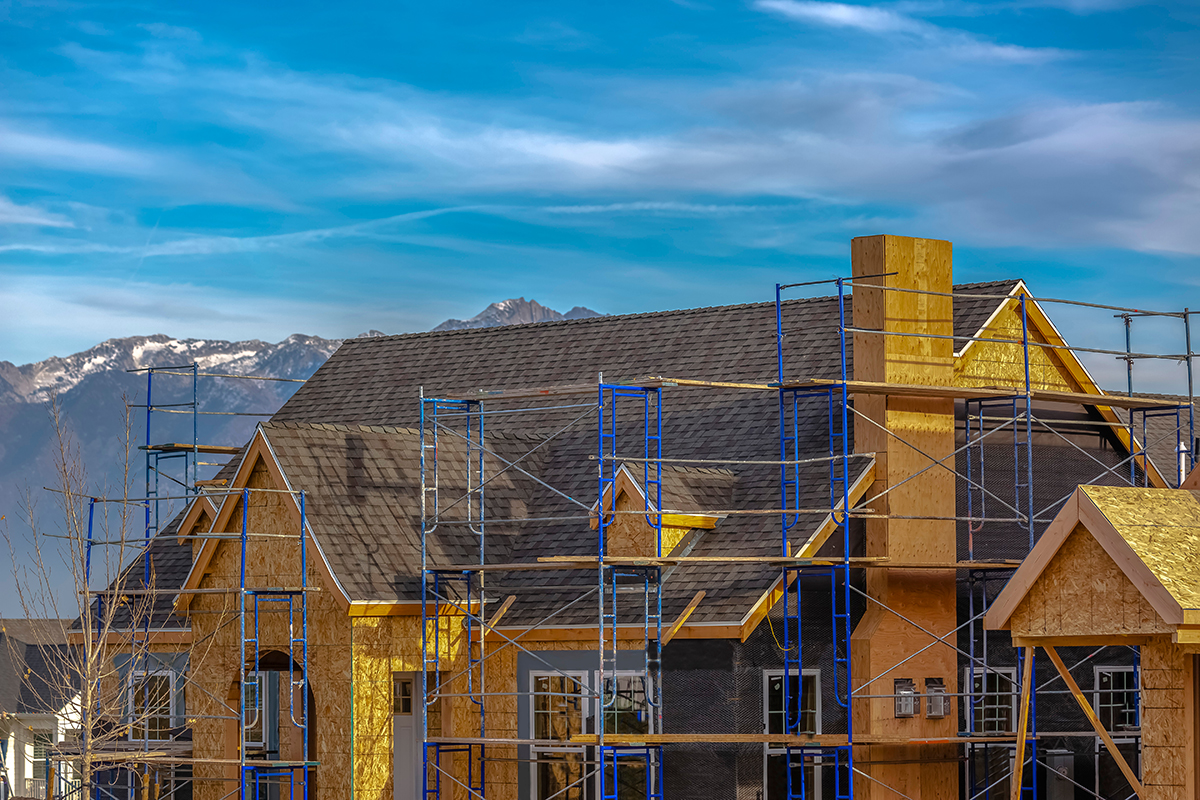
Splitting A&D and vertical financing across two lenders isn’t impossible, builders do it all the time. But it creates friction that compounds across the entire life of a project, and there’s no getting around the fact that you have two draw processes, two sets of documentation requirements, and two teams with different visibility into what’s happening on the ground.
When something shifts mid-build (and something always does), those gaps start to show. The handoff point between an A&D lender and a vertical lender introduces its own coordination problem, and information that seems obvious to one party doesn’t always make it cleanly to the other.
So when the same lender carries a project from start to finish, a lot of that unnecessary shuffling just goes away. By the time vertical construction starts, there’s no onboarding, no file transfer, no moment where the new team is catching up. The lending team that’s working on your vertical loan already knows the land, the infrastructure, the draw history, and you.
Local Knowledge Is Part of the Underwriting
Building in Utah’s residential construction market isn’t like most other metros. In the Salt Lake area, more than 100 local contractors and developers account for around 70 percent of the market. It’s a tight professional community, and reputation moves through it fast in both directions.
That also means local context factors into lending decisions in ways that are hard to understand from a distance. A lender in another state isn’t going to know what currently exists near or around your site, what’s already permitted in the area, and what that means for your location — and these things matter when you’re evaluating an A&D loan.
Nuanced, contextual understanding can only come from decades of experience working in this market. First Utah Bank’s production lending team has been here long enough that local knowledge is genuinely part of how we look at a deal, not something we’re catching up on.
On the practical side, this is the same team working with you throughout the life of your loan, and you’ll always get the same person on the phone when a draw question or a mid-project wrinkle comes up. There are no third-party contacts to go through and no “regional desk.” No one who has to go look up your account before they can help you.
Who We Work With
First Utah Bank works with builders at every stage, from developers working on their first subdivision to established operations running multiple projects at once. We also work with builders who’ve bumped up against their primary bank’s capacity and need an expansion lender — not a replacement for a relationship that’s already working, just another avenue to help you keep growing.
For builders who are continuously in production, we structure lines of credit designed to revolve as homes sell and new starts go in the ground, with pre-negotiated spec limits built-in so you’re not seeking new approval every time you start a spec. Our goal is to provide a lending relationship that moves at the same pace your business runs.
If you’re working on an A&D project or a subdivision in Utah and you’re interested in exploring what a relationship with First Utah Bank looks like, our team would be happy to talk with you directly. Just fill out this form and one of our specialized construction loan officers will get in touch.