
Team Spotlight: Dillon George, EVP, Chief Credit Officer
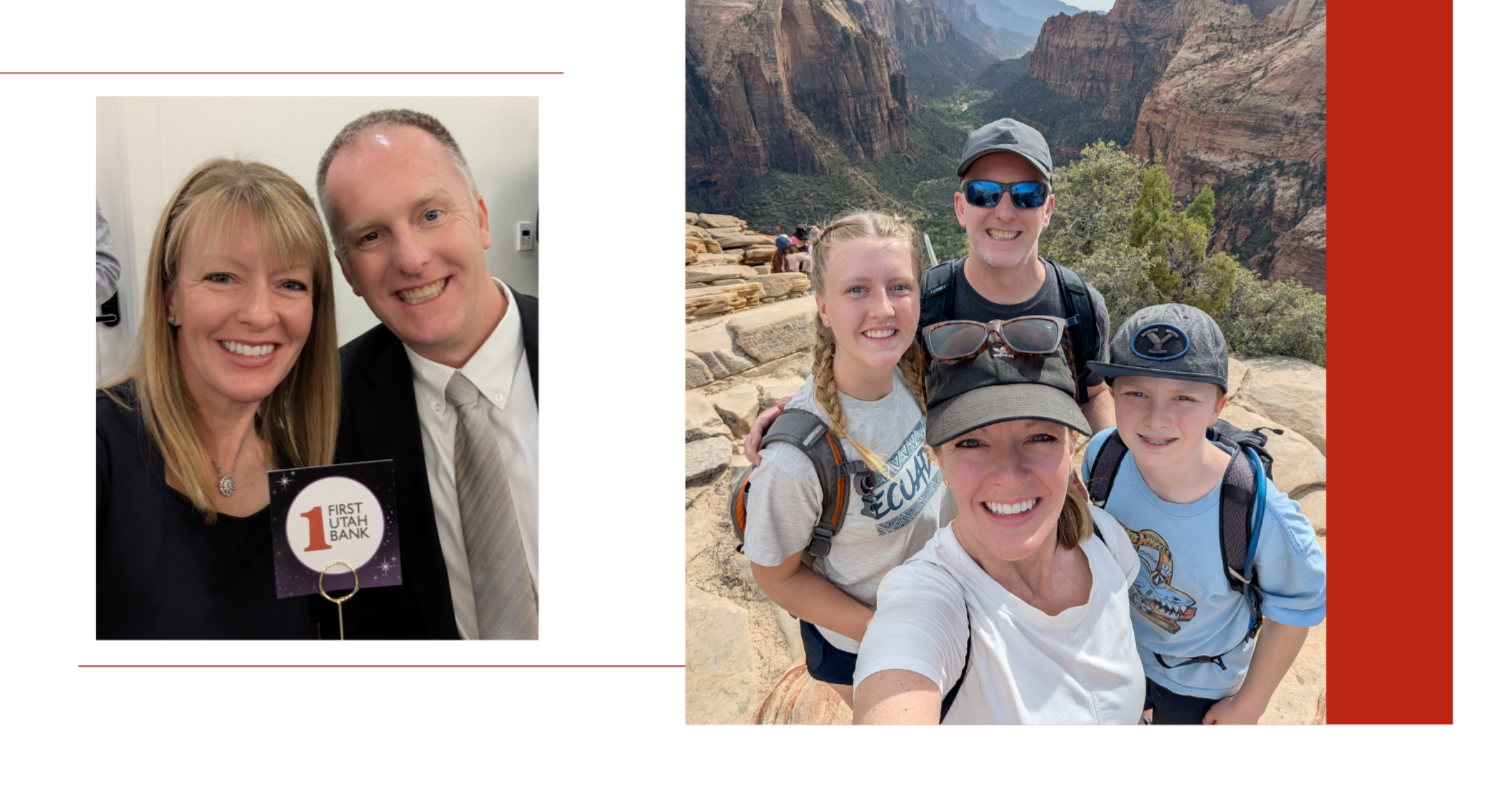 Sometimes, Dillon George will drive past a customer’s business on his way home and that’s when he’ll feel it—the simple satisfaction of having been a part of something. Knowing the story behind that brick-and-mortar shop and the people who have worked so hard for its success.
“Knowing we were a small part of helping them realize their goals and their dreams… that’s really rewarding,” says George, EVP and Chief Credit Officer at First Utah Bank.
It’s this sense of accomplishment that drew him to community banking and what’s kept him in this industry for more than two decades. George joined First Utah Bank in 2018 and has served as Chief Credit Officer for the past several years, overseeing the teams responsible for credit quality, from the moment a loan comes in through its entire lifespan.
The Science and the Art
 Over the course of his career, George has worked in retail banking, commercial lending, portfolio management and credit analysis, each role deepening his understanding of how banks work and how they can work better for the people they serve.
At First Utah Bank, George’s team sits at the center of every lending decision the bank makes. When a business applies for a loan, they evaluate credit quality and make sure the loan is right for the borrower and for the bank. Once it closes, his portfolio management team monitors the loan and works alongside the client long term.
There’s more to making a strong credit decision than just numbers, which is why George meets with customers regularly—something that would be unusual for someone in his role at a larger bank.
“There’s a science side and an art side,” he says. “The science is concrete—debt coverage ratio, loan to value, etc. But there is an art side as well. What does the management team look like? What are the owners doing to make their business successful? One side doesn’t supersede the other. They go in tandem.”
An intentional culture at First Utah Bank makes this possible, where customers have direct access to decision-makers, who have a genuine interest in what they’re trying to achieve. “This is what it looks like when your bank is truly your partner.” George says. “When someone calls in, they’re not calling an 800 number. They’re calling someone who knows their name, knows their business and can make decisions.”
20 Years of Progress, Up Close
When you spend as much time in community banking as George has, you come away with a much deeper sense of what’s possible. George has watched businesses grow over years and decades, through new construction and expanded facilities, from a loan application to something real.
“To see the progression of what our customers have been able to accomplish, that’s one of the really fun parts about banking.” That kind of trajectory is something he finds energizing; seeing where a business started, where it is now, and being part of what made it possible to get there.
“Banking is a people business, and providing fantastic customer service, really pushing what’s possible, and trying to offer that in all aspects of what we do—both within the bank and with our customers—is the real focus.”
The Best Kept Secret
When he’s away from work, George loves to spend time with his family. He and his wife have been married 22 years and have four children between the ages of 13 and 20. He coaches one of his son’s soccer teams, and he likes to go mountain biking, hiking, or running when he needs to recharge.
When George talks about First Utah Bank’s community-centered philosophy, he wishes more people knew about it. “I feel like we’re one of the best-kept secrets,” he says. “We have this great business model and approach. I would love for people to come and see what community banking actually looks like and what it means to have consistent, meaningful access to decision-makers.”
That’s the spirit behind First Utah Bank’s guiding principle, Redefining Possible. For George, this means getting to know customers on a one-to-one basis and enjoying his front-row seat as they achieve their goals. “To be a small part of facilitating somebody else’s success—that’s not something most people get to feel in their work.”