

Utah’s Small Business Economy 2026 Fall Edition: Inflation, Pricing, and Hiring Challenges

When we checked in with local business owners last spring, readers told us they liked hearing from real people running real businesses down the street, not just national headlines. So we went back for another round. In just the last six months, concerns have grown over increased pricing, finding qualified employees, keeping customers, and planning ahead during turbulent times.
We talked with a new cohort of Utah business owners to get their take on the current state of our economy: Josh Asher, owner of Epic Electric, which handles residential and commercial electrical work; Alex Shields, who owns Fashion Windows and Wasatch Shutter Design; Annette Bejarano, owner of Evolve Tax Services, a tax prep, tax planning, payroll and bookkeeping firm; and Matt Kirchner, co-owner of Accuracy Automotive, an auto repair business with shops in Holladay, Murray and South Salt Lake.
How has inflation affected your business?
Asher: Inflation has affected pretty much every aspect of our business. Everything is costing more, from insurance and fuel to our vehicles and the materials we use every day. Copper is a big one for us. As electrical contractors, we rely heavily on copper wiring, and the rising cost has really made an impact. Prices tend to fluctuate, but copper has been particularly expensive lately. The challenge is that while our costs continue to rise, we can’t always pass those increases directly on to our customers. We’re trying to stay competitive while still running a profitable business, and that’s becoming increasingly difficult.
Shields: As we’ve seen all the tariffs and inflation with fuel costs, your large national manufacturers all raise their prices. They just raise them, and you either buy it or you don’t. On the manufacturing side, our wood suppliers and our shipping are all seeing inflation. Gas prices have doubled. It’s crazy.
Bejarano: Inflation has caused me to have to bump up wages a little bit, and I’ve noticed my expenses increasing, like the software. I’ve never seen it go up as high as it has in the last two years. The tax software has tripled, and QuickBooks has quadrupled in the last few years.
Kirchner: We always joke that if we were keeping up with inflation, our labor rate would be $300 an hour. In the last five years we’ve gone from about $105 to $180. Parts have gone up too. Belts are up 700-900% in the last five years. We can’t pass all of that along to the customer, so our overall profit margin has shrunk.
How are you handling price conversations with customers?
Asher: We really have to sit down with customers and have an honest, human conversation about pricing. Most people understand because they’re feeling the same financial pressures in their own lives. A good example is a service or meter upgrade. We have customers who received quotes five to ten years ago, and when we give them today’s pricing, you can almost see their eyes glaze over. There’s definitely some sticker shock. It’s also making it harder to win as many jobs as we used to. I don’t have the exact numbers, but let’s say we were winning around 80% of the jobs we bid on in the past. That percentage has dropped significantly. People are being much more cautious about where they’re spending their money, even when the electrical work is necessary.
Shields: People are tightening up their wallets and taking longer to accept bids. Normally you’d see two or three quotes just to keep everybody honest. Now you’re seeing up to six, sometimes eight. We can’t just price ourselves to the bottom. We have to sell our value and our experience as a 30-year business. I try to look internally first: where can we save, where can we absorb this, and what inefficiencies do we have that maybe you don’t notice when cash is good? I try not to pass as much as possible to the customer, because the customer can only take so much.
Bejarano: I’ve had to increase prices to cover those costs, but I probably haven’t increased enough, and I do need to bump them up a little more. I gradually increase rather than all at once. If I suddenly charge a client double, they’re not going to stay. And I don’t like to be unfair to the clients, either. I take a look at all of the expenses, see what it’s actually costing me for clients and what I’m paying out, and make sure we come out ahead somehow.
Kirchner: I think most customers understand, and it’s just managers properly setting the expectation when they first have them on the phone. The hardest part is differentiating what’s apples to apples. Somebody might get a cheaper price because that shop is using a cheap part. We will not put cheap parts in a Mercedes because we know you’ll be back.
Has hiring and keeping employees changed?
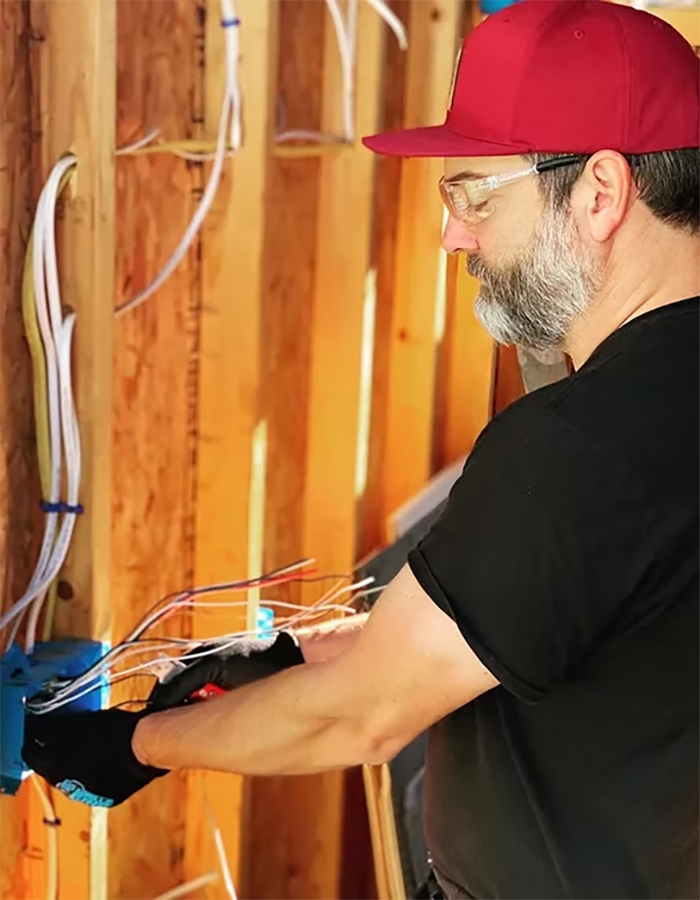
Asher: Absolutely. When we find a qualified electrician who’s a good fit for our company, we want to keep them, and that means paying them well. One of the biggest challenges right now is competing with larger commercial and industrial projects, especially data centers. A lot of skilled electricians who have been in the trade for five to ten years are being drawn to that work because of the pay and incentives. For example, some of these projects are offering an additional $200 a day on top of their regular hourly wage. That’s an extra $1,000 a week, which is pretty hard to compete with. We’re primarily in the residential service industry, so we don’t necessarily have the same resources or incentives to offer. It makes attracting and retaining experienced electricians more challenging when they’re able to make significantly more money on these larger projects.
Shields: On our Fashion Windows side, our salespeople make pretty good money on what they sell, so it’s pretty easy to keep them around. In manufacturing you have to be really tight on payroll, and they’ll go for another dollar somewhere else. We had a guy leave to lay asphalt for eight bucks more an hour, and we can’t even compete with that. Can we blame one thing? I don’t think so. We’re as much to blame as an employer, as the market.
Bejarano: You’ve got to keep up with the price increases, because otherwise you’re not going to be able to keep employees if they aren’t able to sustain working for you. I think it’s been a little bit easier to find people, but then you’ve got to find employees who are capable of doing taxes. For me, it’s worth it making sure that I can find someone with that kind of experience and knowledge.
Kirchner: We would have been able to hire a true master tech at $35 an hour five years ago, but that’s at least $50 an hour now, and that gets tied into our labor rate. It’s not a trade that many millennials and younger people desire. Everybody wants to be a YouTuber. So the ones who do it are in higher demand, and they’re worth it.
What about borrowing and cash flow?

Asher: Most of our financing has been for vehicles. We haven’t taken out a business loan, but it’s something I’ve considered. With borrowing costs being higher, expanding becomes more challenging. Right now, we’re focused on managing cash flow, maintaining what we’ve built, and not overextending ourselves.
Shields: Access to capital right now is crazy expensive. Something I’ve definitely learned is that when your cash is high and your business is super healthy, that’s when you should be out trying to get loans and money, because as soon as they see six months of a downturn, it’s really hard to get capital.
Kirchner: It’s easier to find funding for things and easier to be approved for funding. Lines of credit are a little easier to get. But a six-figure income doesn’t get you what it would have five years ago, so dual incomes in the household are more and more important.
Is Utah’s economy more resilient than the economies of other states?
Asher: I talk with friends in the electrical trade across the country, and they’re experiencing different levels of financial challenges. Here in Utah, it feels like the waves are a little less choppy. We’re still feeling the effects of the economy, but things seem a bit more stable compared to what I’m hearing elsewhere.
Shields: It seems like Utah’s healthy. There are a lot of people moving here, a lot of buildings, and a lot of business owners. We’re in some networking groups, and the Blue Collar Connect has been a really cool group, full of business owners trying to support one another. I don’t know that you could be in another state and not be struggling. I think the fight is going to be the same fight wherever you’re at, but Utah has a lot of go-getter personalities.
Bejarano: I think so. We have a good community here in Utah for business, and they’re hardworking people and seem to try to adapt. We just seem to do what we have to do here to make things work.
Kirchner: We were, because the inventory on homes was so low and people were consistently moving in. But you’re buying parts from somebody who’s serving the whole country, or sometimes the whole world, so they set that based off of global or national economics.
Has AI changed anything for you?
Shields: So far, only in a good way. AI is a tool, and it’s something we’ve embraced. I have conversations with it all the time to hash out business ideas and scenarios. It’s like a business coach in your pocket. Is it something you can be fully reliant on? I don’t think so. It still needs to be fact-checked.
Bejarano: We appreciate when clients bring us ideas or information they’ve explored with AI. It gives us a chance to review it together, clarify what applies, and make the experience better for them. In tax work, accuracy and confidentiality come first. AI can make mistakes, so we verify tax information and use our personal judgment. We also need to protect clients and not put their data into public AI tools. I see AI as a tool with the potential to help us serve more clients while continuing to give them guidance. It’s improving quickly, and I’m optimistic about what the future holds.
Kirchner: Negatively and positively. I basically have an assistant with me at all times now because I pay for ChatGPT. Today I put together a PDF in about three minutes. We also have automatic review responses for our Google reviews. I used to sit down on a weekend and go through 50 reviews and respond to them all. I think search will eventually convert over to AI and ChatGPT, and OpenAI now has paid ads, so we’re experimenting with those right now.
Where are you seeing bright spots?

Asher: We’re optimistic about the long-term future. There will always be ups and downs, but new technologies continue to create opportunities. We’re seeing demand for EV chargers, electrical service upgrades, and even luxury items like hot tubs and saunas. At the end of the day, electricians are always going to be needed in some capacity. If we stay focused, adapt to the market, and don’t get too caught up in the ups and downs, I think we’ll be just fine.
Shields: Right now, top of mind is building relationships. When I was at Fashion Windows, our business was fully reliant on relationships with builders, interior designers, and referral partnerships. With the addition of Wasatch, we’re trying to really focus on building relationships with other partners. I think that’s where we’re going to find the opportunities.
Bejarano: People really want to support local, and I hear that all the time. Women-owned and local seems to be what people really want. When I first started, it wasn’t like this; I think people were looking for big companies. Now I think people want to support local rather than big box. That’s why I’m bringing on another person—I really want to serve my neighborhood.
Kirchner: We are still a growing city, county, and state, with people moving here because of the tech industry. I think that’s probably the biggest opportunity, as we get denser and denser with population. We’re also planning to get our mobile side going in the next three to six months. And with gas prices, people are going to drive less. We think what makes the most sense is more of a transition to hybrid.
What advice would you give other local business owners?
Shields: Build relationships. You never know who knows who. Dial in your client and go after that client. Something I’ve learned is that revenue doesn’t always mean profit. Just because you’re busy, just because you’re selling stuff, it does not mean you’re going to pay the bills next week. So know your numbers; make sure you hire somebody that knows your numbers. Being around other businesses and collaborating with your competition has been huge, and it makes you realize that you’re not screwing it up.
Bejarano: Know your numbers and your costs and your cash flow so that you can make sure you’re adjusting your pricing. Know what’s actually coming in, because some business owners aren’t keeping track until it’s crunch time and tax time, and then they say, “Oh no, no wonder why that felt so hard.” I’d say look at them at least monthly.
Kirchner: Know your numbers, know your business. Every time I think we’re not making any money, I go back into the numbers. Our three biggest expenses are our payroll, taxes and advertising costs, so being able to decipher where you can improve is big. Run lean, because that’s really the only thing you can do with payroll. And look into what programs you can qualify for. There’s always government stuff out there, and there’s help somewhere sometimes that you may not know about. Believe me, we are not ripping people off. At the end of every month we’re scrambling to get work out so we can take home what we need to pay our personal bills, and at the same time we’re trying to grow.
What We Heard From Everyone
All of the business owners we talked with are dealing with the same things—higher costs, customers weighing every dollar, and complicated pricing decisions that aren’t easy to make. They’re also working through it in similar ways.
Prices will keep moving, and no one can say exactly when things will settle. What owners can do is stay close to their numbers, talk openly with their customers about what’s going on, and lean on the people around them. These Utah businesses are doing exactly that, and many of them are still hiring and finding new ways of serving their customers.
Do you have a unique take on Utah’s small business economy? Join the conversation via Instagram and share your thoughts with us.